
How to Improve Warehouse Efficiency Before Q3 Demand Picks Up
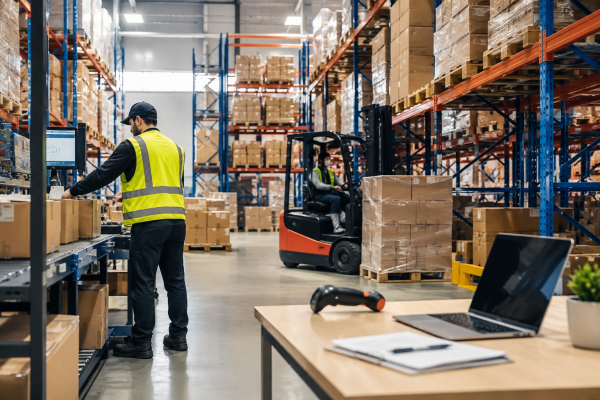
Warehouse efficiency has a direct impact on freight performance. When inventory is organized, staging areas are clear, and outbound shipments are prepared correctly, freight moves more smoothly. When warehouse flow breaks down, transportation delays and added costs often follow.
That is why June is a good time to review warehouse operations.
The second half of the year can bring higher order volume, tighter shipping windows, and more pressure on warehouse teams. Small inefficiencies that feel manageable now may become larger issues once demand increases.
A warehouse review does not have to be overly complex. It starts with identifying where time, space, and movement are being wasted.
Start with Inventory Accuracy
Warehouse efficiency depends on knowing what you have and where it is located.
When inventory is inaccurate, the entire operation slows down. Teams spend time searching for products. Orders take longer to pick. Shipments may be delayed while discrepancies are resolved. In some cases, inaccurate inventory can lead to unnecessary expedited shipping or missed customer expectations.
Before Q3, SMBs should review:
• Inventory counts
• SKU locations
• Fast-moving products
• Slow-moving products
• Stock discrepancies
• Reorder patterns
Accurate inventory helps warehouse teams work faster and gives transportation teams better information for outbound planning. It also supports better decisions around storage, replenishment, and customer service.
Review Layout and Product Flow
A warehouse does not need to be large to become inefficient. Poor layout can create delays in facilities of any size.
If fast-moving products are stored too far from staging areas, workers spend unnecessary time moving through the facility. If slow-moving inventory takes up prime space, outbound flow becomes less efficient. If inbound and outbound activity cross over each other too often, congestion builds.
A mid-year layout review should focus on how products actually move.
Questions to ask include:
• Are high-volume items easy to access?
• Are staging areas large enough for current volume?
• Are aisles clear and organized?
• Are products stored in a way that supports picking speed?
• Are inbound and outbound flows creating congestion?
The best warehouse layout is not always the most sophisticated. It is the one that reduces unnecessary movement and supports consistent output.
Reduce Unnecessary Handling
Every extra touch adds cost and risk.
When product is moved too many times, the chances of damage, misplaced inventory, and labor inefficiency increase. During slower periods, those issues may be manageable. During busier periods, they can quickly create delays.
Look for points in the process where freight is being moved more than necessary. This might happen when inventory is stored in the wrong location, freight is staged too early, or product has to be repeatedly moved to access other items.
Reducing unnecessary handling helps improve:
• Labor efficiency
• Shipment accuracy
• Product protection
• Dock flow
• Freight readiness
Better flow inside the warehouse makes it easier to prepare freight correctly before pickup.
Improve Staging and Dock Readiness
Outbound staging is one of the most important areas to review before volume builds.
If shipments are not staged clearly, loading takes longer. If freight is not ready when carriers arrive, pickup delays can occur. If documentation, labels, or pallet preparation are inconsistent, errors become more likely.
Strong staging practices help improve:
• Loading speed
• Shipment accuracy
• Carrier pickup performance
• Dock safety
• Visibility into outbound freight
For LTL shipments, staging also supports better pallet preparation, labeling, and documentation. Those details matter after pickup because they help freight move more efficiently through the carrier network.
A cleaner staging process often leads to fewer delays and fewer surprises.
Align Warehouse Activity with Shipping Schedules
Warehouse and transportation teams should not operate in separate lanes.
If outbound shipments are planned without considering warehouse capacity, orders may be rushed. If warehouse activity is planned without considering pickup schedules, freight may sit too long or miss planned movement.
Better coordination helps reduce last-minute decisions.
This includes:
• Planning outbound volume by day
• Preparing shipments ahead of pickup windows
• Matching labor needs to shipping demand
• Communicating changes early
• Reviewing recurring delays
When warehouse activity and transportation schedules are aligned, shipments are easier to manage and costs are easier to control.
Use Flexible Support When Needed
Not every warehouse challenge requires a permanent change.
Sometimes businesses need temporary support during seasonal demand, inventory overflow, special projects, or inbound shipment changes. Flexible warehousing and distribution services can help SMBs adapt without overcommitting.
Options may include:
• Short-term storage
• Overflow warehousing
• Cross docking
• Transloading
• Value-added handling
• Packaging or labeling support
These services can help businesses handle changing volume while keeping core operations focused and stable.
How Amware Supports Warehouse Efficiency
Amware helps SMBs improve warehouse performance by connecting distribution services with transportation strategy.
That connection matters. Warehouse efficiency does not stop at the dock. It influences freight cost, shipment timing, and customer service.
Amware supports businesses with distribution warehousing, LTL coordination, cross docking, transloading, and Amrate visibility. This integrated approach helps customers improve flow, reduce unnecessary handling, and prepare for changes in demand.
For businesses that do not have the time, space, or labor to manage every shift internally, working with an integrated logistics partner can provide more flexibility and control.