
5 Ways Packaging Can Increase LTL Shipping Costs
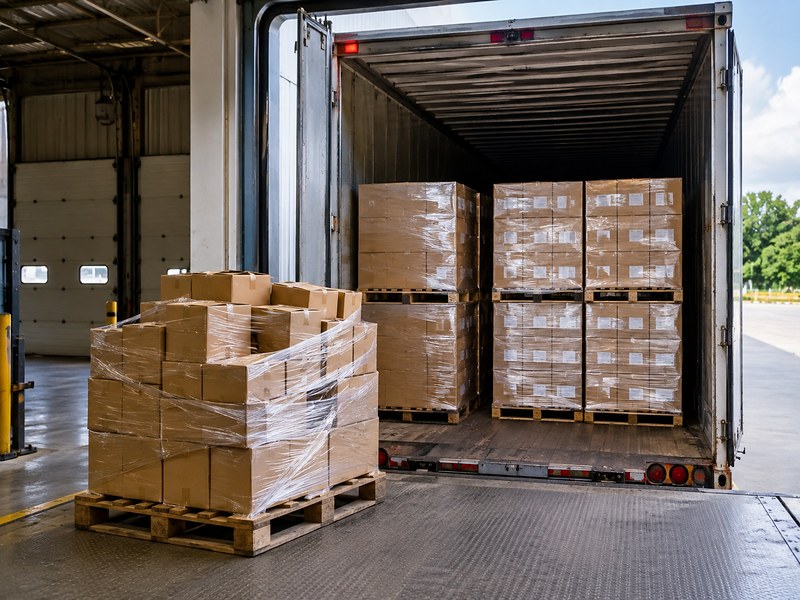
When businesses look for ways to reduce LTL transportation costs, the search often begins with the carrier.
Could we negotiate a better rate? Should we use another carrier? Would consolidating shipments save money?
Those are reasonable questions. But sometimes an opportunity to improve LTL costs is sitting on the warehouse floor before the carrier ever arrives. It's the freight itself.
In less-than-truckload shipping, carriers aren't simply moving weight. They're managing a finite amount of trailer space across networks where freight from multiple customers must travel together efficiently.
That makes the size, shape, density, and packaging of your shipment important considerations. With more commodities now using density-based freight classifications, understanding exactly how much space your freight occupies has become even more important.
Here are five areas worth examining.
1. Your Pallet May Be Larger Than It Needs to Be
Walk through almost any warehouse and you'll see the familiar 48-by-40-inch pallet. It's an industry standard for good reason, but that doesn't necessarily mean every shipment uses that footprint efficiently.
Products that extend beyond the pallet create obvious problems. Less obvious is freight that occupies only part of the available footprint or requires an unnecessarily large pallet because of the way cartons have been arranged.
Consider two shipments containing the same products and weighing the same amount. If one can be configured into a smaller, denser handling unit, it occupies less cubic space.
That's important because density compares the weight of a shipment with the amount of space it occupies.
Packaging engineers have always thought about cube utilization. With density playing a larger role in LTL classification, transportation teams should be thinking about it as well.
2. A Few Extra Inches of Height Can Matter
Shipment dimensions aren't based only on the product inside the boxes. The entire handling unit matters. That includes the pallet, cartons, packaging materials and anything projecting from the shipment. Something as simple as excessive carton height or an unnecessary gap between layers can increase the shipment's total cube. Those differences may appear insignificant when you're looking at one pallet. Multiply them across hundreds of pallets over the course of a year and the amount of trailer space being consumed becomes much more significant.
This doesn't mean businesses should eliminate packaging simply to reduce dimensions. Packaging has an important job: protecting products as they move through the LTL network.
The better question is whether you're using the right amount of packaging in the right configuration.
3. Poorly Configured Freight Can Be Difficult to Stack
Density isn't the only consideration in LTL transportation.
Carriers also have to determine how efficiently freight can be loaded alongside other shipments.
A stable, properly packaged pallet can be easier to position within a trailer. Irregular shapes, protruding products, unstable cartons and freight that cannot safely support anything above it may limit the carrier's loading options.
Imagine a pallet that's four feet tall but cannot have anything placed on top of it. Depending on the freight and carrier requirements, much of the space between the top of that pallet and the trailer ceiling may effectively become unavailable for other freight.
Sometimes non-stackable packaging is absolutely necessary to protect a product. Preventing damage should always take priority over squeezing a few additional cubic feet from a shipment.
But if freight is routinely marked or packaged as non-stackable simply because "that's how we've always shipped it," it's worth taking another look.
4. Estimated Dimensions Can Create Expensive Surprises
For years, some shippers could get reasonably close when entering shipment dimensions without experiencing significant consequences.
That's becoming increasingly risky.
The National Motor Freight Classification system has moved thousands of items toward density-based classification. Determining density requires accurate handling-unit weight along with length, width and height.
If the information provided by the shipper doesn't match what the carrier measures, the shipment may be reclassified. That can lead to billing adjustments, delays and unexpected charges.
There's a simple operational lesson here: don't guess.
Measure freight as it's actually tendered to the carrier, including the pallet and packaging. Make sure warehouse and transportation systems are using current dimensions rather than specifications entered years ago.
If packaging changes, update the data.
Accurate information helps carriers price and handle freight correctly while giving shippers a much clearer understanding of what they're actually paying to move.
5. Packaging and Transportation Shouldn't Be Separate Decisions
This may be the biggest opportunity of all.
Packaging decisions are often made by one department while transportation decisions are made by another. The packaging team focuses on protecting the product. The warehouse focuses on storing and handling it. Transportation focuses on getting it to the customer at an acceptable cost. But all three decisions are connected. Changing a carton can change how many units fit on a pallet. Changing pallet configuration can change shipment dimensions. Changing dimensions can affect density. Packaging can also influence whether freight can be stacked and how easily it can be handled within an LTL terminal and trailer. A packaging decision made months before a shipment leaves the warehouse can therefore influence transportation efficiency all the way to its destination.
That makes LTL optimization more than a carrier-pricing exercise. It's a supply chain exercise.
Make Every Inch Count
There's no universal packaging configuration that will produce the lowest LTL cost for every shipment. Products still need to arrive safely. Fragile freight may require additional protection. Certain products can't be stacked. Others have special handling requirements that matter regardless of density.
The goal isn't simply to make every pallet smaller. It's to eliminate space that isn't serving a purpose. For SMB shippers, that means looking beyond the transportation rate and examining the entire process: how products are packaged, how cartons are configured, how pallets are built, how accurately shipments are measured and how freight is prepared before the carrier arrives.
At Amware, we help businesses look at transportation as part of the larger supply chain. By connecting warehousing, distribution and LTL transportation, we can identify opportunities that aren't always visible when each function is managed separately.
Because sometimes improving your freight spend doesn't start with finding a different truck.
It starts with making better use of the space already on the one you're using.